Tuesday, 14 August 2012

GOING THROUGH GUATEMALA

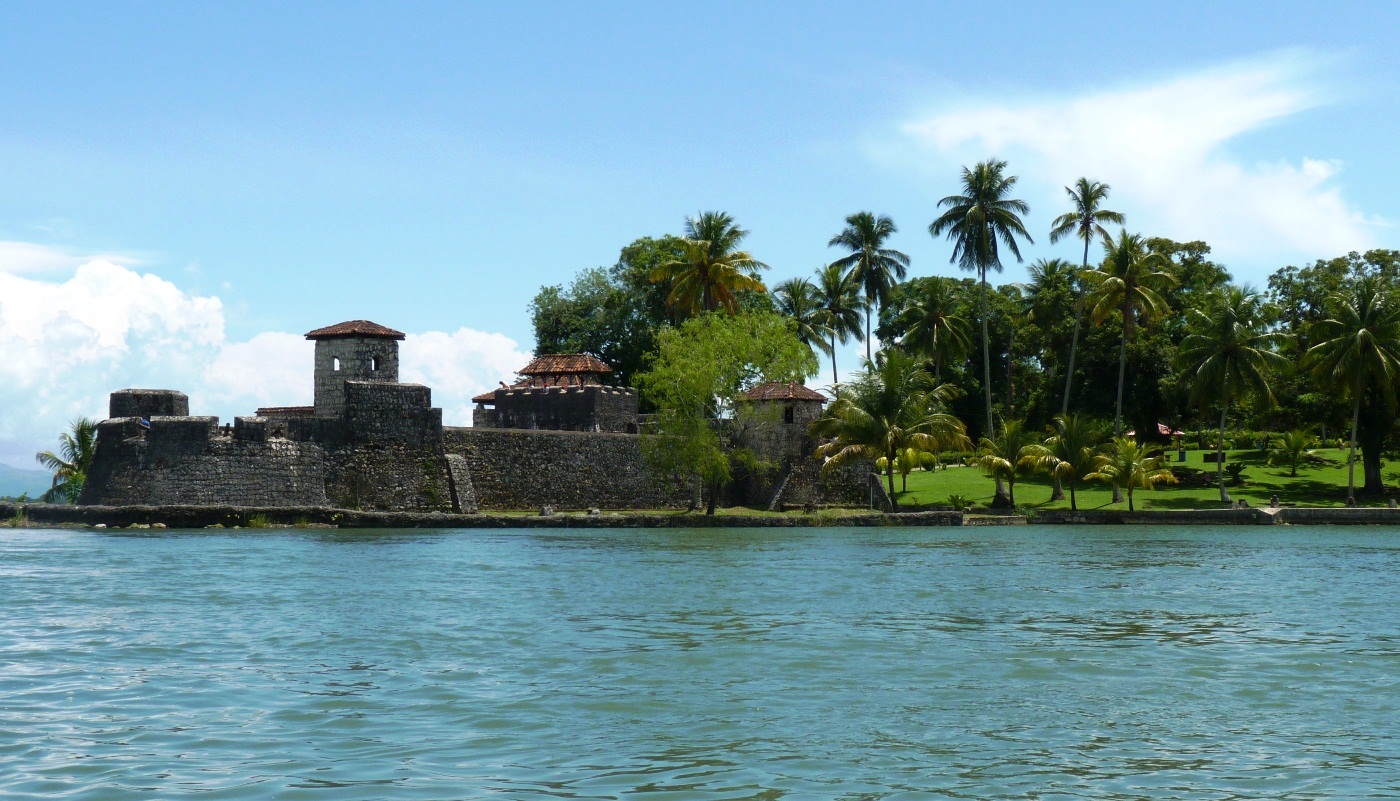
From Copan in Honduras Leana and I cycled up through the hills and crossed the La Florida border into Guatemala. I had to be rather careful as I was cycling on a broken front rim (it had worn through from braking, and the mean cobblesones at Copan had done the final damage). We stayed over at the first big town in Guatemala, Chiquimula, where I fitted the spare wheel rim. We found Guatemala to be quite similar to neighbouring Honduras, and the living expenses were also about the same. Not far from Chiquimula we paid a gratis visit to a small paleanthological museum, looking at the exhibits of dinosaur bones and some other archaeological displays. We took the Carretera Atlantico eastwards in the direction of the Carribean, where we diverted to take a look at another famous Maya archaeological site - Quirigua. In that vicinity there are some huge banana plantations, to the extent that harvested bunches are transported by cable car to points where they can be loaded (see pic). Then, further East and over some hills we stopped at the pleasant Rio Dulce town where we had a cheap room practically on the jetty where some of the many yachts were moored. We stayed a day and payed a visit to the Spanish colonial fort of San Filipe (designed to curtail pirate activity, which did the job untill the pirates burnt the place to the ground). As in many tropical countries, the palm oil industry is becoming popular (see pic of oil palm). We continued northwards from there through the former jungle province of Peten, as far as Florence (a historic town on an island in the lake, with the "other" part of town, Santa Elena and most shops etc., across the causeway on the mainland. Unfortunately I was rather ill (possibly due to drinking bad water earlier), so I didn't fully appreciate the nice room we had overlooking the lake. From there we headed in the direction of Guatemala's (and Central America's) main attraction, Tikal. For details of distances cycled see the following report.

Saturday, 4 August 2012

THE RUINS OF COPAN

From the tropical Carribean island of Roatan, Leana and I took the fast ferry back to the mainland of Honduras. We again stayed over in the nice economical hotel in La Ceiba, where we had been before the island trip. Although we seek out the budget backpacker-type accommodation, our last day on Roatan Island brought us face-to-face with cruise-ship extravagance. We snorkeled off the spectacular beach at West Bay (where hundreds of cruise-ship passengers were spending the day trampling on the shallow coral), and when we left the island on the following day a huge cruise ship was overshadowing the cove from where our ferry departed. From La Cieba we cycled to another Caribbean coastal town, Tela (not a bad local place, actually quite intesting with nice long beaches, and crazy markets). From there we cycled along via the second city of Honduras (the relatively modern industrial city of San Pedro Sula). From there it was a climb up into the mountains, up, up, and over to the famous Maya ruins at Copan. We´ve checked out the archaeological site, as well as the historic town(where the streets are paved with large awkward cobblestones - not suited to bicycles!). In fact the front wheel rim on my bike was damaged, probably as much due to wear-and-tear as the stones (so I'll be re-spoking a wheel for about the millionth time on this trip). Here in Copan we are only about 10 km from the Guatemala border, our next destination. Daily distances cycled since my last report have been:- La Ceiba (+1.5hr ferry) 32 km; Tela 104 km; San Pedro Sula 98 km; Quimistan 63 km; La Entrada 55 km; Copan Ruinas 66 km. The total distance which I have cycled since the start of this journey is 96 605 km, and the approximate total in Honduras is 1 130 km.

Wednesday, 25 July 2012

HALFWAY THROUGH HONDURAS

Since my last report from Nicaragua, Leana and I had a big climb up to the border of Honduras. These 2 countries are part of a 4-country open border agreement, but it is no surprise that you still have to pay a number of dollars for exit and entry into each of these countries. We descended down from the border to the town of Danli, where we were pleased to discover that costs are not much different to those in our previous country (Nicaragua). Honduras is a mountainous country, so we again climbed and eventually descended into the bowl, the capital, Tegucigalpa (try saying that after a few beers!). In the capital I also cleaned up my image by shaving my face for the first time in 9 months (the landlady of the dump where we were staying didn't recognise me the following morning, and wanted to throw me out!). From there we picked an unusual route through the mountains Northwards towards the Carribean coast. The road took us past some rather interesting places. Firstly we made a deviation to the touristy colonial mountain village of Valle De Angeles. Further on we got to big dusty local towns such as Juticalpa. Later, after the end of the paved road, we went through isolated mountain villages like Santa Maria De Madeira, where the children ran away from us as we approached. The road started out as an asphalt paved road, then it turned into a reasoable gravel road, but unfortunately at times we were climbing and descending treacherous eroded tracks (other vehicles who had to do this gauntlet were no faster than what we were at the rough spots). Eventually, as we got closer to the Carribean coast at Bonito Oriental, the pavement returned. We also had some unfortunate clay to contend with, the worst since Borneo (the clay jams the bike to a halt, so you push and clear the blockage by hand every few metres). We stayed over at Saba town (a place where there is an armed guard at every isle in the supermarket). At the coastal town of La Ceiba be took a break, and then took the ferry (fancy big cat "Galaxy Wave") to the biggest of the Bay Islands, Roatan. This island was a haven for pirates over hundreds of years - for some time there were more than 5000 pirates on this island. Now we are staying in a nice room at West End village. I have enjoyed snorkeling in Half Moon Bay about 200m from the room, as well as in neighbouring West Bay (both fantasic, like a huge aquarium, with coral reefs, crystal clear water, and many colourful fish - and even some quite big fish). From here we will obviously return to the mainland, and then carry on towards the ruins of Copan. Distances cycled since my last report have been:- Danli (Honduras) 57 km; Zamorano 66 km; Tegucigalpa 37 km; Valle De Angeles 31 km; Guaimaca 73 km; Juticalpa 86 km; La Paz De San Francisco 44 km; San Esteban 64 km; Benito Oriental 72 km; Saba 85 km; La Ceiba 83 km; and (Roatan Island) West End 27 km (plus 1 and a half hour ferry). The total distance cycled so far in Honduras is 701 km, and the total distance cycled on this trip is 96 187 km. Thanks again to Leana and my sister Olga for financial support.

Monday, 9 July 2012

NICARAGUAN SMOKE

Since entering Nicaragua Leana and I have seen some smoke – mostly volcano smoke, as there are many of these cones along the Pacific Rim. We cycled mostly along the Western side of the country, without bothering to go down to any of the Pacific beaches (we’d seen plenty of those in Costa Rica). Initally we took a ferry across Lago Nicaragua to the twin-vulcano island of Ometepi. On the island we stayed in interesting Moyogalpa village (twice), as well as at a wonderful bungalow on the lake beach where we bathed in the luke-warm water. As I’ve mentioned in my previous report, I had some of my equipment stolen in Costa Rica. Well, here’s a twist in the tale!! On the ferry back from the island to the mainland Leana and I were accused of robbery! Apparently there was an eye-witness who saw us stealing somebody’s money and passport, etc. (my guess is that the so-called eye-witness was the guilty party). Anayway, the cops confiscated our passports and held us in the sweltering port for some time before inexplicably letting us go. In Nicaragua we have primarily visited Historical Colonial cities such as Granada and Leon. We also stayed for a few days in the disjointed capital Managua, mainly looking for spares for Leana’s bike. I say that Managua is disjointed due to the devastating earthquake of 1972, which destroyed the city centre (now the place is a city of suburbs, with the eery deserted centre still marked by the cathedral with clock stopped at the time of disaster). We cycled roughly North along the Pacific, but after the city of Leon we moved (or rather climbed) inland via various active and extinct vulcano’s. Notably we stayed in Esteli, where Cuban immigrants have established a smoking cigar trade (I had to participate in this activity – and I have found the produce to be of excellent quality). Right now we are at the hill-town of Ocotal, about 25 km from the Hunduras border. So, tomorrow we head into another of these smallish Central American countries. In Nicaragua we have probably taken more rest days than cycling days. Anyway, distances since my last report on cycling days have been:- Liberia 79 km; La Cruz (Costa Rica) 62 km; San Jorge (Nicaragua) 64 km; Moyogalpa (Ometepe Isl.) 13 km; San Jose DS 16 km; Moyogalpa (X2) 41 km; Granada 78 km; Masaya 21 km; Managua 42 km; Leon 95 km; San Isidro 114 km; Esteli 36 km; Ocotal 81 km. Total in Nicaragua is about 600 km. Total distance since the start of this journey is 95 462 km.

Monday, 18 June 2012

PURA VIDA – COSTA RICA

Costa Rica is a small but very beautiful country. There is a lot of natural jungle, but in areas there are also large oil-palm plantations, which remind me of the South of Thailand (the Costa Rican flag even looks a lot like that of Thailand). After crossing the border from Panama, I was surprised by Costa Rica in more than one sense. Firstly, the place seemed to be even more “tropical” than Panama, with lots of protected jungle areas of indigenous forest, coconut palms on the coastline, and incredible beaches. The country is a popular surfing tourist destination, and there are also many other foreign tourists and ex-pats. English is commonly spoken (American accent) – and Tamarindo, the “Enless Summer” movie surf spot of years passed, has turned into a bit of a touristy monster referred to by locals as “Tama-GRINGO”. In Costa Rica Leana and I have been cycling along the Pacific coast, and we took the ferry from Puntarenas to the Nicoya Peninsula so that we could stay along the coast and visit all the beautiful beaches in the area. Yes, it is incredibly beautiful, with Congo monkeys high in the trees above our camp sites waking us at dawn. But, if you want to cycle in this area then be warned; The roads on the peninsula are often unpaved and in poor condition, road signs are either non-existent or just blatantly incorrect, and hills are so steep that we have had to help each other push the bikes uphill. It is also interesting as we have had to “wade” the bikes through deep-ish rivers, and in this rainy season we arrived here in Tamarindo coated in mud (and the bikes sounding like rock-crushing machines). We are taking a break here today, and tomorrow we will head inland towards the city of Liberia and then North in the direction of the border. By all accounts the cost of living in Nicaragua will be somewhat cheaper, as we have found Costa Rica to be very expensive. Oh yes, I have something which I need to get off my chest; Things were stolen off my bike the other night – some of those things have been with me all the way on this trip for more than 5 years (helmet, sleeping bag, and such like items). Luckily the bikes were locked (right outside the room door under a bright light). However, we have been warned in various places not to take valuables to public places such as the beach, as locals have been stealing from the tourists. Getting back to cycling, some of the daily cycling distances don´t look like much, but it has sometimes been a battle to make headway on poor roads and VERY steep hills! Since my last report from David in Panama distances have been:- Paso Canoas (Costa Rican border) 54 km; Palmar Norte 95 km; Playa Uvita 46 km; Dominical 23 km; Quepos 47 km; Jaco 70 km; Puntarenas 76 km; Tambor 29 km; Montezuma 21 km; Playa Coyote 40 km; Pueto Carillo 46 km; Ostional (“Robberville”) 51 km; and Tamarindo 67. So far we´ve cycled 631 km in Costa Rica, and the total distance I´ve cycled so far on this trip in 5 years and almost 3 months is 94 720 km.